

Happy (almost) end of Q4 folks! Below, we’ve grouped the key themes from Q4 and linked back to the top posts where each theme resonated the most!
Brought to you by:
Visible - No more chasing founders or wrangling spreadsheets. Finance teams at top VC firms use Visible’s AI-driven platform to streamline portfolio monitoring, stay audit-ready, and impress LPs. Find out why our customers love us today.
AngelList - As VC firms scale their institutional LP base, finance is no longer just back-office hygiene—it’s a strategic advantage. AngelList’s fund admin operates like an outsourced COO, streamlining operations, meeting institutional diligence standards, and delivering timely, accurate reporting. See why 25k funds and syndicates trust AngelList.
Liquidity Moved From Debate to Planning
Liquidity constraints ran through much of the quarter — not as a breaking point, but as an operating assumption.
We saw this most clearly in:
#299: Navigating the 2025 Liquidity Drought
A closer look at why slower exit timelines and delayed DPI are becoming central planning inputs — and how funds are adjusting expectations without assuming a full reset.
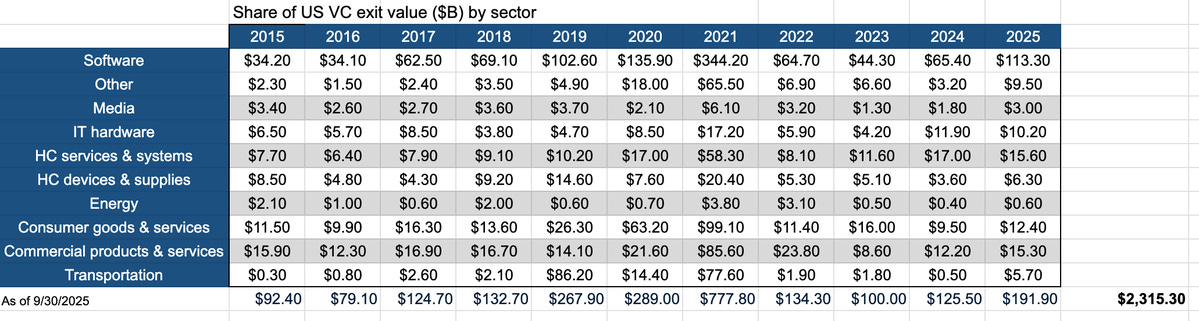
#286: The $90B Plateau — What Q3’25 Says About Venture’s Selective Recovery
Capital is still flowing, but through narrower channels. The post highlighted why liquidity timing matters more when capital formation is selective rather than abundant.
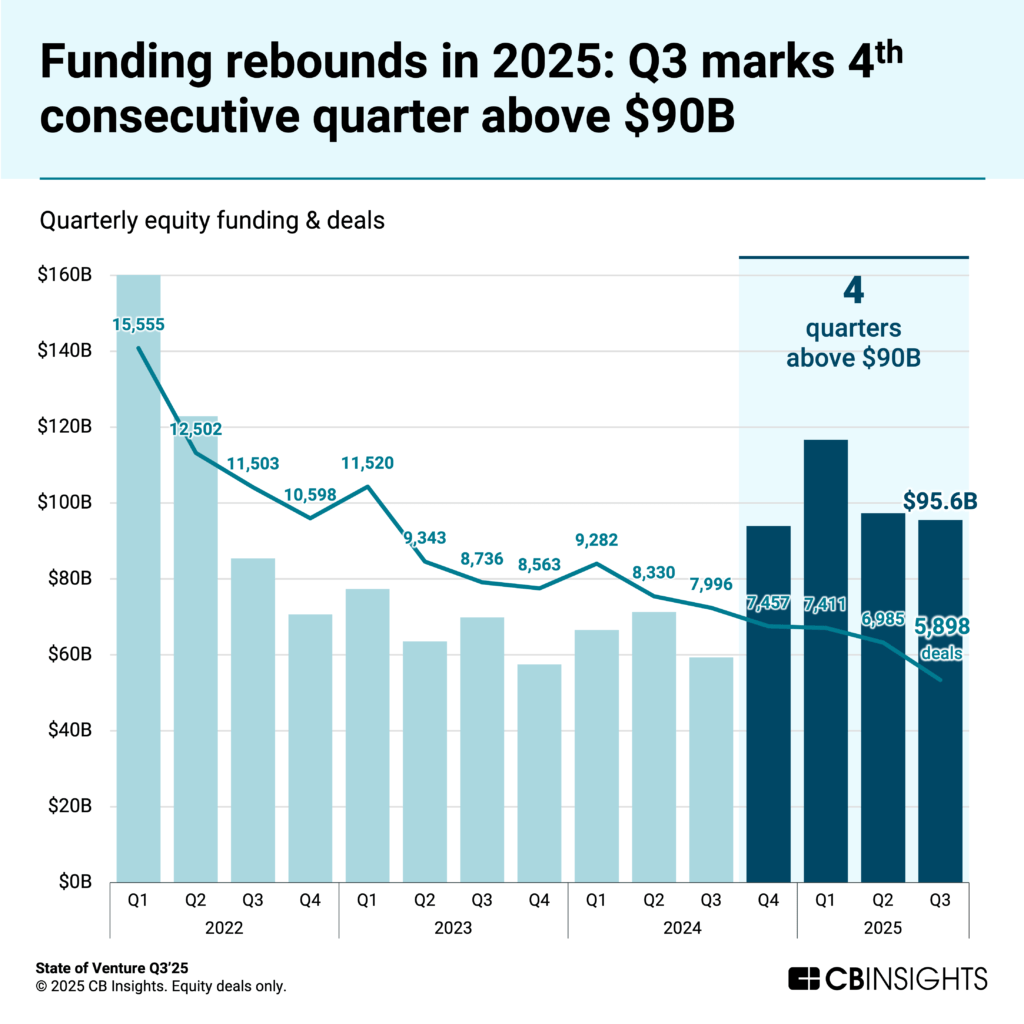
#283: Signs of Life — What Q3 2025 Tells Us About VC’s Slow Rebuild
Early signals of stabilization, paired with reminders that rebuilds tend to be uneven and slow — especially for later-stage liquidity.
Across these posts, one pattern emerged: fewer teams are assuming a rapid liquidity rebound as their base case. Different funds are taking different approaches, but planning horizons are widening.
Performance Dispersion Became Harder to Ignore
Q3 data and Q4 marks reinforced a familiar theme: returns still exist, but they are uneven.
This showed up in:
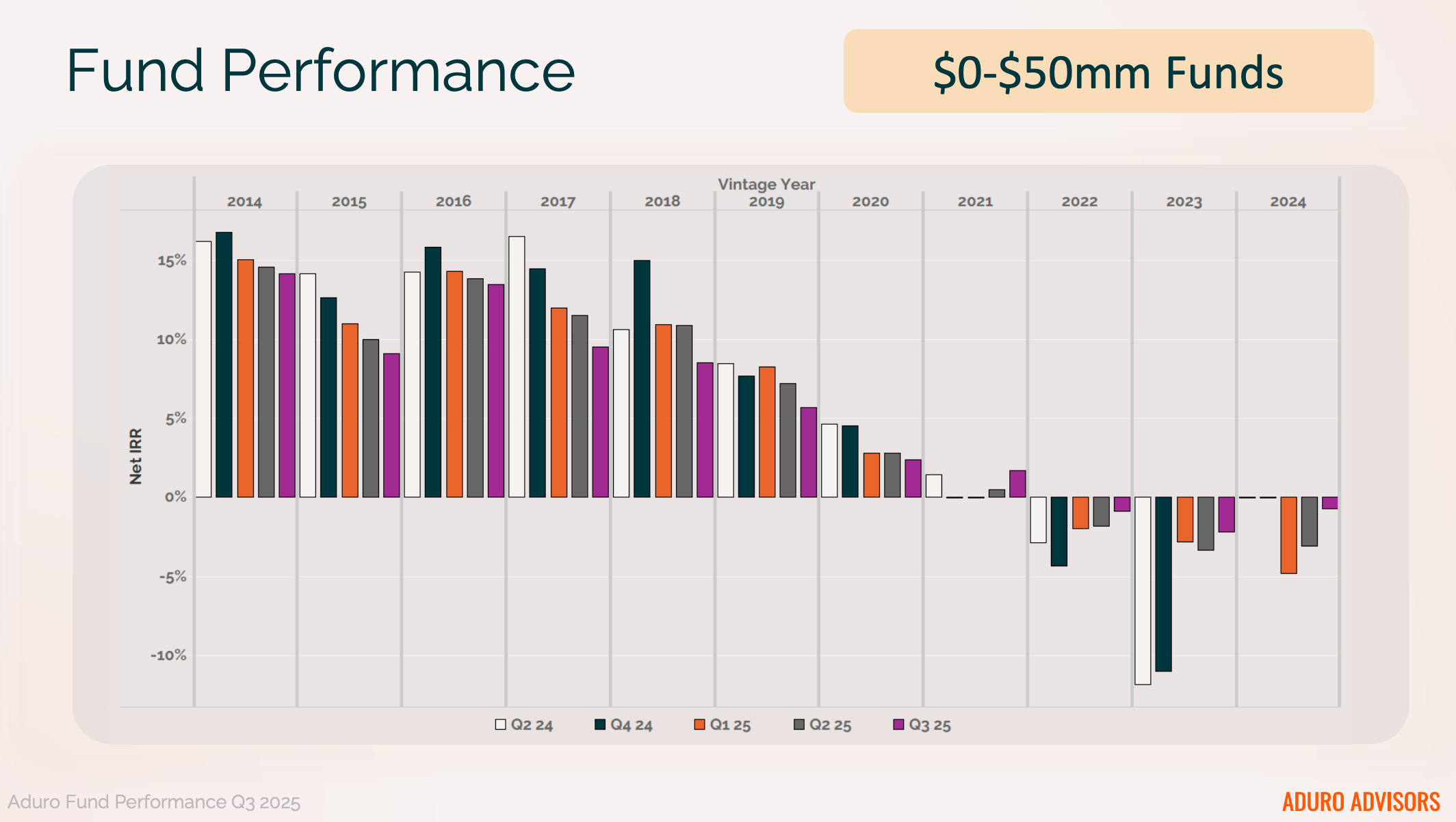
#298: Q3 2025 Fund Performance Highlights
Benchmark data underscored widening dispersion across fund sizes, strategies, and vintages — with outcomes increasingly driven by a small number of positions.
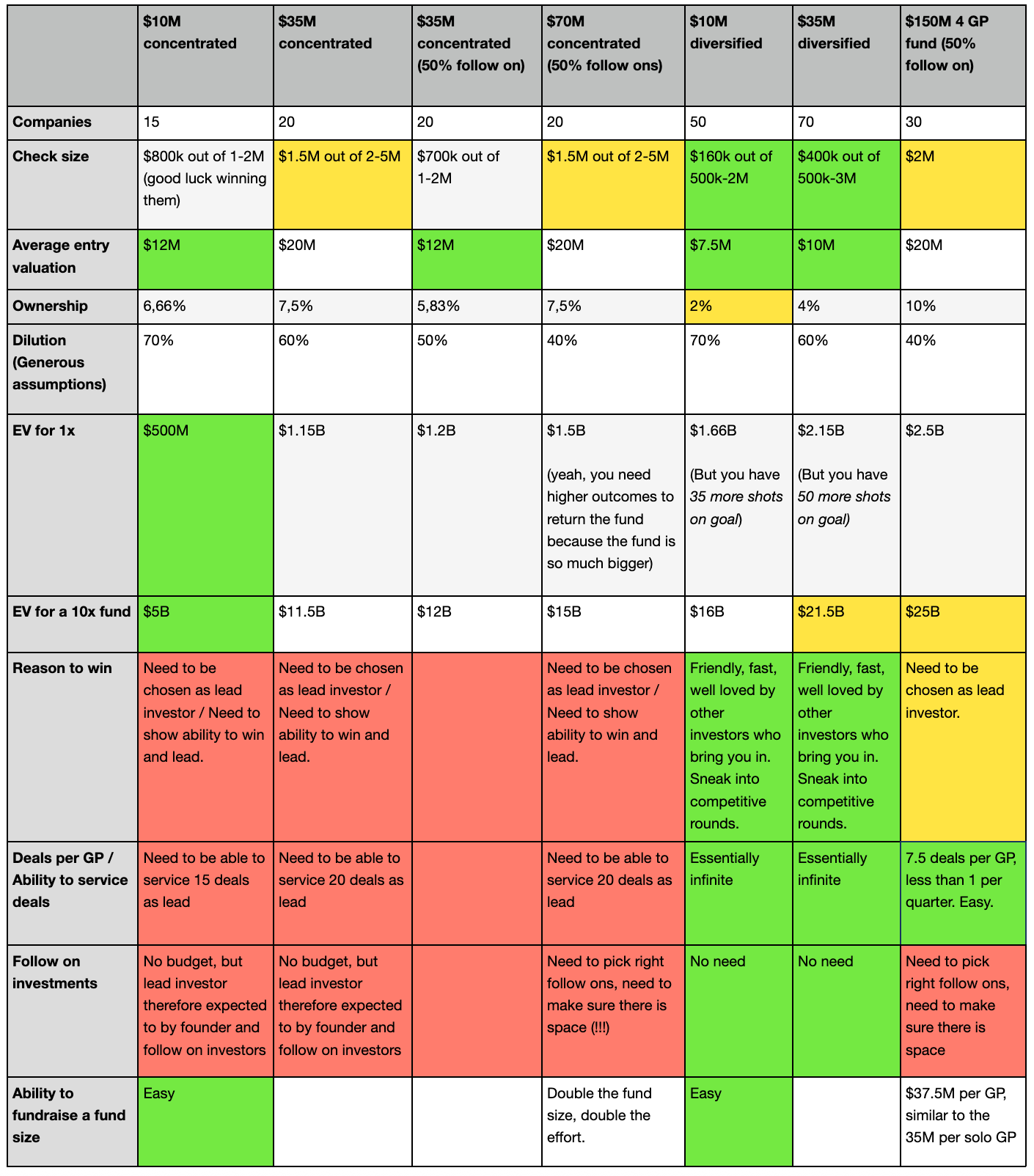
#290: Concentrated vs. Diversified: Fund Model Math That Matters
Explored how concentration, reserves, and ownership interact — and why different portfolio constructions can work depending on assumptions.
#294: A 5x VC Fund Is Rare — But It’s Not a Myth
Reframed expectations around outcomes, emphasizing rarity without implying impossibility — and grounding the discussion in math rather than narrative.
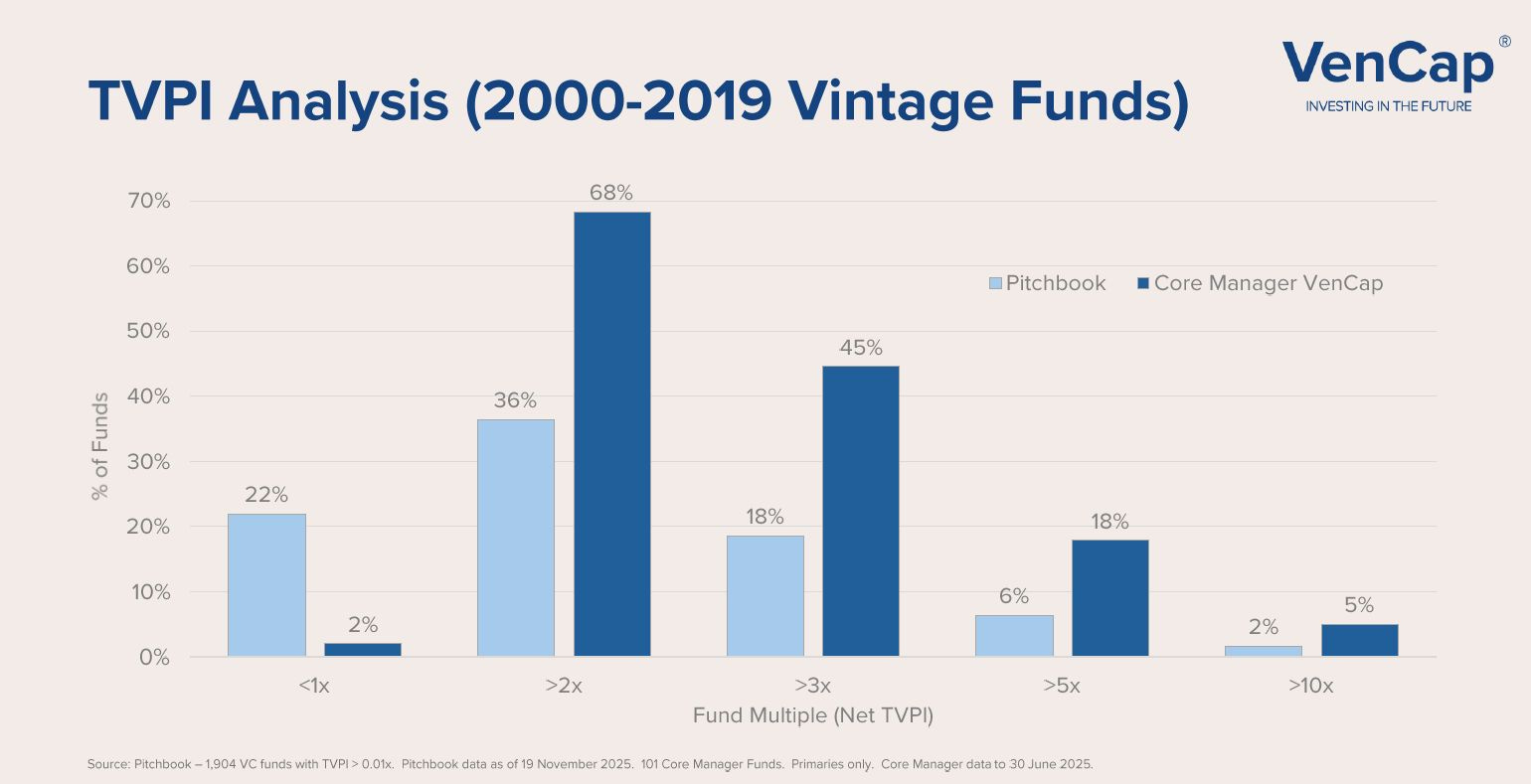
No single fund model dominated. But ownership, entry price, pacing, and follow-on capacity consistently influenced results.
Valuation & Audit Discipline Took Center Stage
As quarter-end approached, valuation and audit prep became more procedural — and more important.
Key posts included:
#297: Q4 Valuation & Audit Time: What’s New?
Covered evolving expectations around disclosure, comparables, and documentation heading into year-end.#281: Q4 Close Coming: Valuations, Audits, and Finance Playbook
A practical look at how early preparation reduces friction later, even when marks don’t change dramatically.#280: Q3 Closing Checklist w/ Playbook, Model, Valuation Updates
Reinforced the value of repeatable processes and internal alignment before quarter-end pressure sets in.
The pattern here wasn’t about optimism or conservatism — it was about defensibility. Funds with cleaner processes tended to encounter fewer surprises.
A “Healthy Market” Looked Selective, Not Busy
Several posts this quarter pushed back on the idea that market health equals volume.
This theme appeared in:
#296: What’s a “Healthy” Venture Market? Are We There Yet?
Explored alternative ways to think about market health — including pricing discipline, pacing, and decision quality.#293: AI Gravity Gap: Solid Co.’s Not Raising
Observed how capital is clustering rather than disappearing, creating uneven fundraising dynamics across otherwise strong companies.
Rather than converging on a single definition of “healthy,” Q4 suggested that intentionality mattered more than activity.
What Q4 Reinforced for Fund Operators
Across these posts, a few principles surfaced repeatedly:
Fund models are decision tools, not just reporting artifacts
Reserves provide flexibility, but come with real trade-offs
LPs tend to value clarity of assumptions over certainty of outcomes
Multiple strategies can work if the mechanics are explicit and well-communicated
Much of the progress this quarter looked operational — and that’s often where durability starts.
Looking Ahead
Next week, we’ll publish Best of 2025, highlighting the posts, frameworks, and tools that resonated most with GPs, CFOs, and LPs over the year.
🎯 Tools to Navigate a More Selective, Quartile-Driven Market
A recurring theme from Q3 and Q4 was that dispersion drives outcomes — not just across vintages, but within fund sizes and portfolios. Many GPs have been asking for practical ways to evaluate pacing, ownership, reserves, DPI timing, and the real impact of concentration in a structured, repeatable way.
Below are a few tools we use internally that can help you pressure-test these decisions with more clarity:
